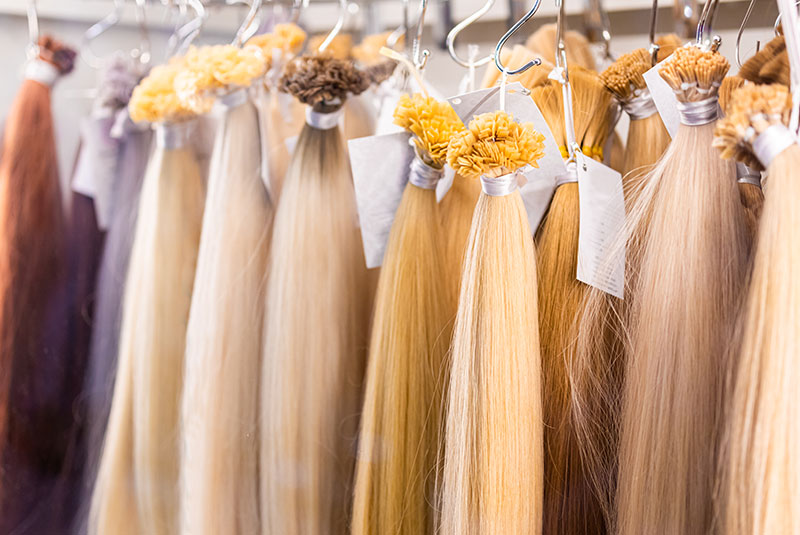
Choosing human hair extensions for a business involves much more than selecting an attractive color or hairstyle. For wholesalers, distributors, salons, extension studios, and private-label brands, the right product needs to balance appearance, consistency, application method, target price, packaging, and the preferences of the local market.
Understanding these factors before placing an order can make product selection more efficient and help businesses build a more suitable extension range.
Start with the Application Method
Different extension systems are designed for different customers and usage scenarios. Tape-in extensions are popular for their relatively flat attachment area and professional salon application. Weft extensions provide flexible installation possibilities and are widely used by professional stylists. Clip-in extensions can be removed easily and are suitable for customers who want temporary changes in length or volume.
Other systems, including bonded and specialized PU-based extensions, can meet different professional installation requirements.
Before choosing a product, buyers should consider who will use it, how it will be installed, and whether it is intended for salon services, wholesale distribution, retail, or online sales.
Pay Attention to Hair Quality and Consistency
For B2B purchasing, consistency can be just as important as the quality of an individual sample.
A good extension should have an attractive appearance, smooth texture, appropriate density, and consistent color. However, professional buyers also need to consider whether these characteristics can be maintained across larger production quantities and repeat orders.
Stable sourcing, standardized processing, careful color control, production inspection, and finished-product quality checks all contribute to reliable bulk-order performance.
Build a Practical Color and Length Range
Offering too few options may limit sales, while carrying too many specifications can create unnecessary inventory pressure. Businesses should develop their product range according to their target customers.
Natural black, brown, blonde, and mixed shades can form the foundation of a collection, while balayage, ombré, highlighted, and customized shades can help expand the range for specific markets.
Lengths and weights should also be selected according to customer preferences and the intended application method.
Consider Private-Label Customization
For businesses building their own hair extension brands, customization can add significant commercial value. Manufacturers may support customized specifications such as length, color, width, weight, construction, logo labels, tags, and packaging.
A coordinated private-label solution allows buyers to develop products that better reflect their brand positioning instead of competing only through standard products.
Work with a Manufacturer That Understands B2B Requirements
Product quality is only one part of a successful sourcing relationship. Communication, sample development, specification confirmation, production capacity, quality control, packaging, and delivery also affect the purchasing experience.
Before starting bulk production, buyers should clearly confirm product specifications and evaluate samples whenever necessary. Establishing clear standards at the beginning can reduce misunderstandings and provide a stronger foundation for long-term cooperation.
For wholesalers, brands, distributors, salons, and extension studios, choosing the right human hair extension supplier is ultimately about finding a balance between product quality, customization flexibility, supply stability, and commercial requirements.