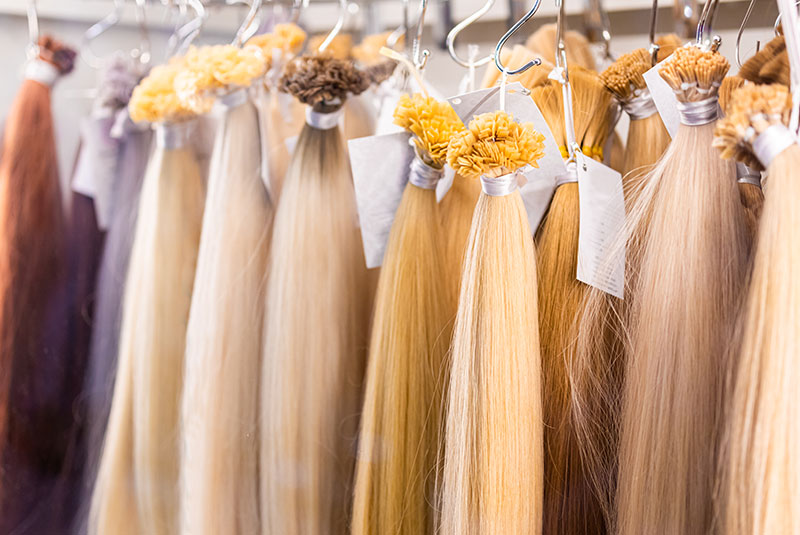
As competition in the hair extension market increases, standard products alone are no longer enough for many professional buyers. Hair brands, wholesalers, distributors, salons, extension studios, and cross-border sellers are increasingly looking for customized human hair extension solutions that can better match their customers and brand positioning.
From product specifications to packaging, customization is becoming an important part of modern hair extension manufacturing.
Customized Length, Color, Width, and Weight
Different markets have different preferences. Some customers prefer natural everyday lengths, while others focus on longer and fuller styles. Hair density, extension width, individual piece weight, and total package weight can also vary according to the installation method and target market.
Color customization is particularly important. In addition to conventional black, brown, and blonde shades, buyers may request highlights, balayage effects, ombré combinations, mixed shades, and other color solutions.
A flexible manufacturing system allows buyers to create product specifications around actual market demand rather than being restricted to a fixed catalog.
Multiple Extension Constructions
The construction of an extension directly affects its application and positioning.
Professional buyers may source traditional hair wefts, hand-tied or hand-finished weft styles, machine-made PU wefts, tape-based products, clip-in extensions, bonded extensions, and other specialized systems.
Offering multiple constructions allows wholesalers and brands to serve different customer groups through one coordinated product portfolio. It also gives professional salons and extension studios more options when selecting products for different installation techniques.
Logo, Label, and Packaging Customization
For private-label buyers, customization does not end with the hair itself.
Logo labels, product tags, specification stickers, instruction cards, inner packaging, and outer retail boxes all contribute to the presentation of a finished product. Consistent packaging can help a hair extension collection look more professional and strengthen brand recognition across online and offline sales channels.
For cross-border e-commerce sellers, appropriate packaging should also consider transportation, product protection, storage, and the unboxing experience.
From Product Supplier to Customization Partner
The role of a human hair extension manufacturer is gradually changing. Professional B2B customers increasingly expect manufacturers to support product development, sample confirmation, specification adjustment, production, quality inspection, labeling, packaging, and delivery.
This integrated approach can simplify sourcing, particularly for buyers managing multiple colors, lengths, constructions, and packaging requirements.
As human hair extensions become more diverse and brand-driven, flexible customization will continue to play an important role in the industry. Manufacturers with strong production capabilities and systematic quality control can help buyers transform product ideas into commercially ready extension collections.
For brands, wholesalers, distributors, salons, extension studios, and cross-border sellers, customized human hair extensions provide an opportunity to differentiate their product ranges and respond more effectively to changing market demand.