On this page
Butterfly Weft uses a segmented base with petal-like gaps that allow a stylist to separate sections at the intended points. That construction can help with planning widths, but the finished result still depends on where the sections sit, how they are supported and how the added hair blends with your own.
If you are comparing it with an ordinary continuous weft, ask to see the base opened out. The useful difference is in the structure at the top of the hair. A product name alone does not tell you whether the installation will suit your haircut or your everyday styles.
Read the petal gaps as part of the construction
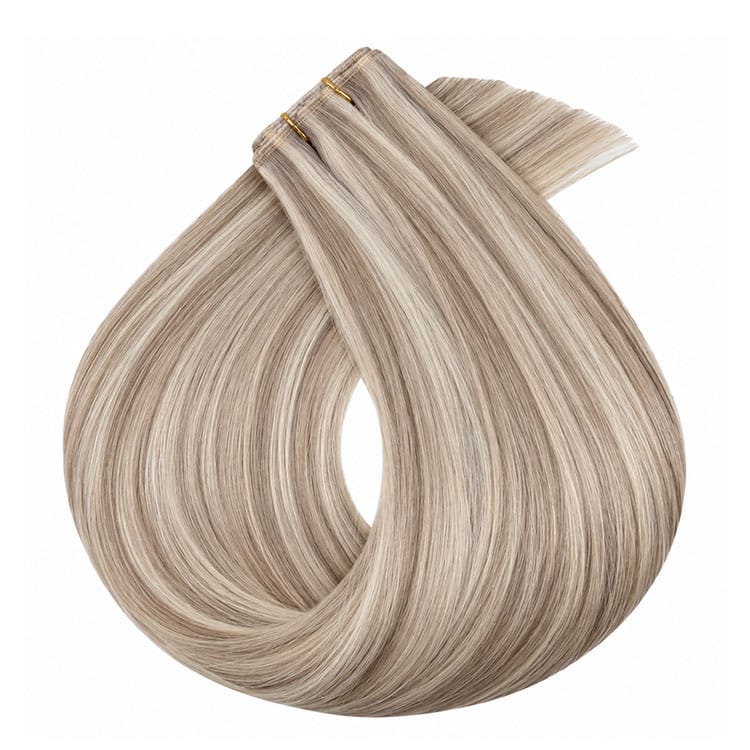
The Butterfly Weft listing describes human hair with intact cuticles and a segmented weft base. Sections separate along the petal gaps to allow width adjustments for sew-in fitting and targeted volume. It cautions against tearing across the base.
This makes the gaps functional parts of the product, rather than decorative spaces. A stylist should identify the intended separation lines before preparing pieces. Pulling on an unfamiliar section to see whether it comes apart can damage the edge or release hair in a way that is difficult to correct.
Look at a sample from both sides. Check how the hair hangs beneath the segmented edge and where one section meets the next. These details help you understand the fitting explanation without needing to learn the manufacturing vocabulary.
Compare it with a continuous thin weft
Genius Weft uses a thin machine-woven base designed to lie flat. Butterfly Weft’s distinctive feature is its segmented base and intended petal separation lines. Both can be part of a professional fitting plan, but the preparation instructions are not interchangeable.
| What you are comparing | Butterfly Weft | Genius Weft |
|---|---|---|
| Base described on the site | Segmented base with petal gaps | Thin machine-woven base |
| Width adjustment | Separate at the intended petal lines | Cut to planned widths with edge securing recommended |
| Main visual check | How prepared sections meet within the row | How the continuous slim edge sits |
| What the name does not decide | Total quantity and personal suitability | Total quantity and personal suitability |
| Useful fitting question | Where will the sections begin and finish? | Where will the edge sit and how will cut ends be secured? |
Compare equal lengths and similar amounts of hair when possible. A difference in fullness can otherwise be mistaken for a difference in base design. The table describes the products’ constructions, not a ranking of which one everyone should wear.
Begin with the shape of the style
Ask yourself whether you want extra length, fuller ends or more hair in a particular area. Those are different tasks. A narrow section can be useful where coverage is limited, while a long, dense result requires a broader plan for the whole outline.
Bring a picture of your own hair resting naturally down your back. A front-facing photograph often conceals a blunt line or short layers that affect blending. Include the side view too, especially if your front layers are much shorter than the back.
The segmented base gives the stylist another way to prepare the material. It does not remove the need to choose the amount of hair carefully. If the desired style requires more weight than your own hair can comfortably support, smaller segments do not solve that underlying problem.
Width planning should come before separation
Once sections are separated, the original continuous arrangement cannot simply be restored. A professional should decide the widths and positions with the completed fitting in mind. This includes the natural curve of the head and the amount of covering hair above each area.
Think of the sections as parts of one hairstyle rather than a collection that must all be used. Leaving an unnecessary piece out may give a flatter result than forcing every section into a limited space. You can ask why a particular width is useful and what it contributes to the blend.
If a stylist keeps remaining material, have it identified by shade and length. A later maintenance appointment is easier when the hair’s details remain clear. Keep records of any coloring or major restyling too, because the current condition matters more than the original label when considering reuse.
A fitted row still needs enough natural cover
Hair above the weft has to fall over the base in your usual style. The segmented edge can still become visible when the covering layer separates or when you lift the hair into a different direction. Check the back and sides rather than judging from the front alone.
Ask to try the hairstyle you wear most often before leaving the appointment. A low ponytail and a high ponytail expose different parts of the fitting. A style that keeps one edge hidden while the hair is loose may reveal it when you tuck the sides back.
If the base shows, discuss the position, the amount or the hairstyle. Using a heavy layer of spray to hold covering hair in place can hide a problem temporarily without making the placement more practical. You want a result that survives ordinary movement, rather than a still photograph.
Plan color across the whole row
Several sections should read as one continuous hairstyle once fitted. Match them with your natural mid-lengths and ends, considering any highlights or darker root. A mismatch can remain noticeable even when the base is well concealed.
If you have a varied color, ask how the light and dark areas will be arranged. A few brighter sections concentrated in one place can create a stripe. The aim may instead be a quieter distribution that appears when the hair moves.
Use the color chart to begin the discussion and compare a physical sample when the match matters. Describe the outcome in ordinary terms: less yellow, a deeper root, softer brown or brighter pieces around the face. Clear observations are more useful than guessing a technical color formula.
The cut at the bottom matters too
The base is the reason the product has a distinctive name, but the ends are where a poor blend often becomes obvious. Look for a sudden change between your natural ends and the extension lengths. The issue may involve quantity, texture or the shape of your haircut.
A stylist may plan a finishing trim so the added hair follows a believable outline. Allow for that when choosing an ordered length. If you want the final hair to sit at a particular point on your back, explain that point rather than simply asking for the longest option you can find.
Try the expected finish as well. Straight hair can reveal a line that loose waves disguise, while a very curled finish can change the visible length. A good plan works with the way you intend to wear the hair most often.
Care for the completed fitting, not just the loose weft
Ask for instructions that match the installation method your stylist uses. You need to know how to clean the scalp, detangle around the row and dry the area near the base. General advice for a loose bundle does not explain access to the roots under an installed row.
Handle the top edge gently. Do not drag a comb through the segmented base or pull two sections apart during detangling. Work on the hair lengths in manageable sections and support the hair above the area you are combing.
The human hair is described as suitable for washing and heat styling, but that does not mean a styling tool should press against the base. Keep direct high heat away from the attachment area and test a hidden length before changing the finish of the whole set.
Leave with a clear maintenance plan
Before the first fitting ends, confirm when the stylist wants to review the row and how you should report a problem. Slipping, difficult tangles near the support or a visible section edge need assessment. They are not good reasons to tighten the entire hairstyle yourself.
For a broad introduction to the different ways added hair is attached, see Wikipedia’s overview of hair integrations. Use the exact Butterfly Weft instructions for the handling of its base, because that construction is more specific than the general category.
Ask about the product with your intended style in mind. A photograph, your current length and a short description of where you want more fullness are enough to start a useful discussion through the form below.
Frequently asked questions
Is Butterfly Weft automatically a no-sew method?
No. The listed Ruiteng product is described for sew-in fitting and targeted volume. Similar names elsewhere may refer to different systems. Confirm the actual base and installation rather than assuming a name proves that no sewing or other professional work is involved.
Can I tear it into smaller pieces?
The product description says to separate sections along the intended petal gaps and avoid tearing across the base. Have a stylist identify those lines and plan the widths. An irregular tear can affect both security and shedding.
Will the sections show through fine hair?
They can if there is too little covering hair or the position is unsuitable. The segmented design does not guarantee concealment. A consultation should check the actual density and condition of your hair as well as the amount you want to add.
Can I curl Butterfly Weft hair?
The listed human hair supports curling, but keep direct tool contact away from the base. Follow the care instructions and test a discreet section. Previously processed hair may respond differently from a new sample, so change the finish gradually.
What is the most useful sample to request?
Ask for a sample that shows the base clearly and is close to the shade you want. Compare how the sections are intended to separate and how the hair falls below them. A photograph of the lengths alone cannot show the product’s main construction feature.