On this page
Tape in hair extensions are flat sections of added hair secured with adhesive tabs during a professional fitting. They stay installed between appointments, so choosing them means choosing a washing, drying and refitting routine as well as a hairstyle. They can give a close-fitting result, but the right placement and suitable scalp conditions matter as much as the thin base.
If you are considering your first set, ask about your ordinary week rather than starting with a promised lifespan. Your hair density, parting, exercise habits and usual hairstyles help a stylist decide whether the attachment areas can stay comfortable, concealed and manageable.
The flat tab is only one part of the fitting
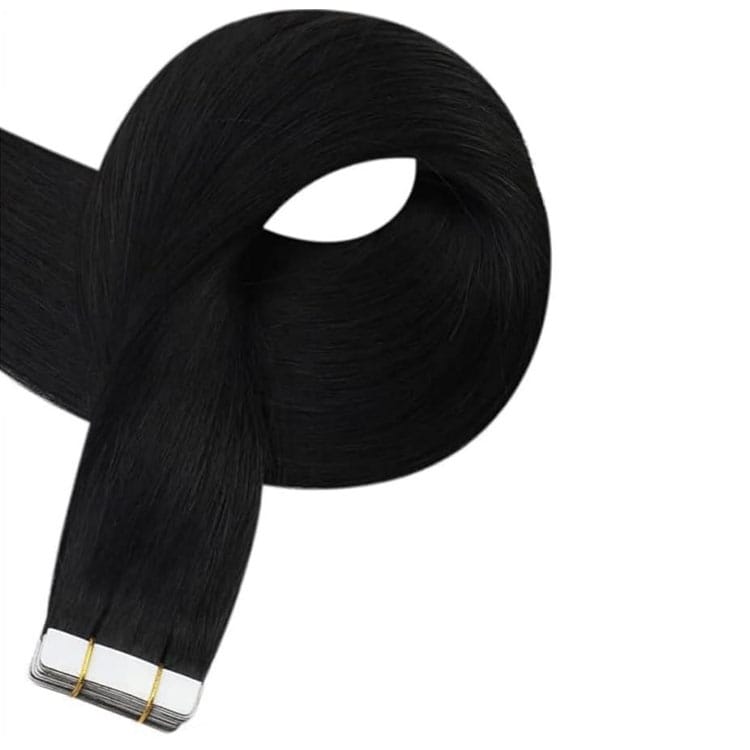
Each tape-in section has hair attached to a base that carries adhesive. The stylist plans how the tabs hold sections of your own hair and where those attachments sit. A low-profile base can lie close to the head, but it still creates an area that must be kept accessible for cleaning and checking.
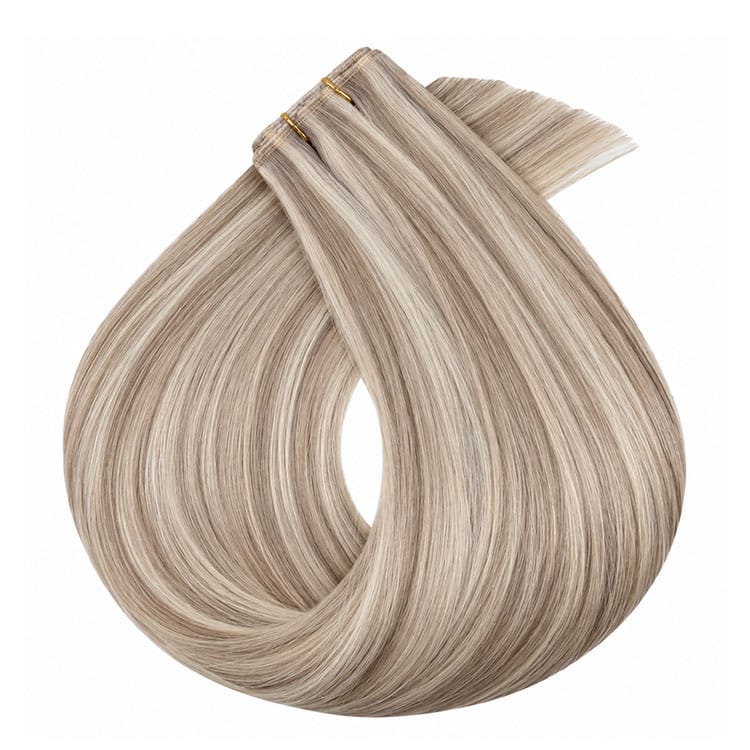
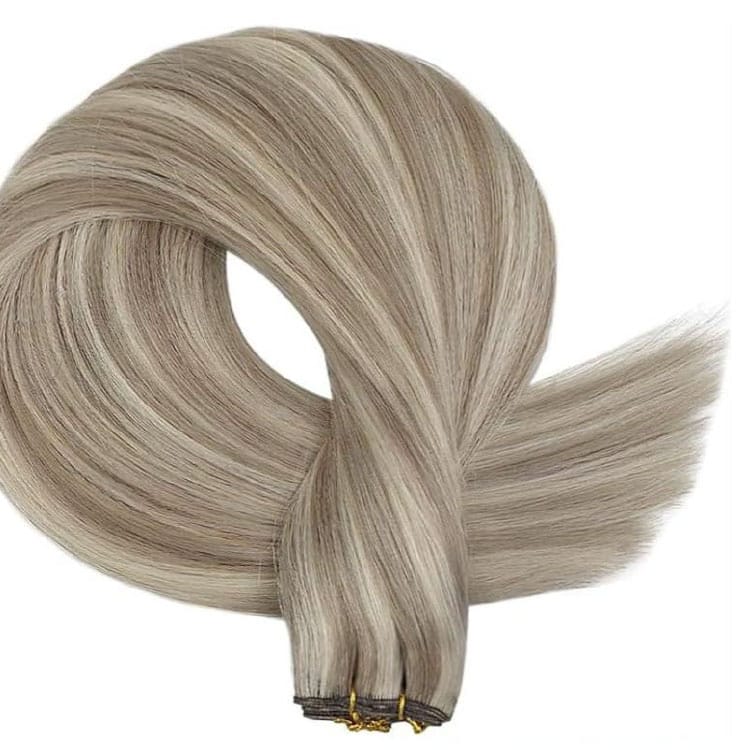
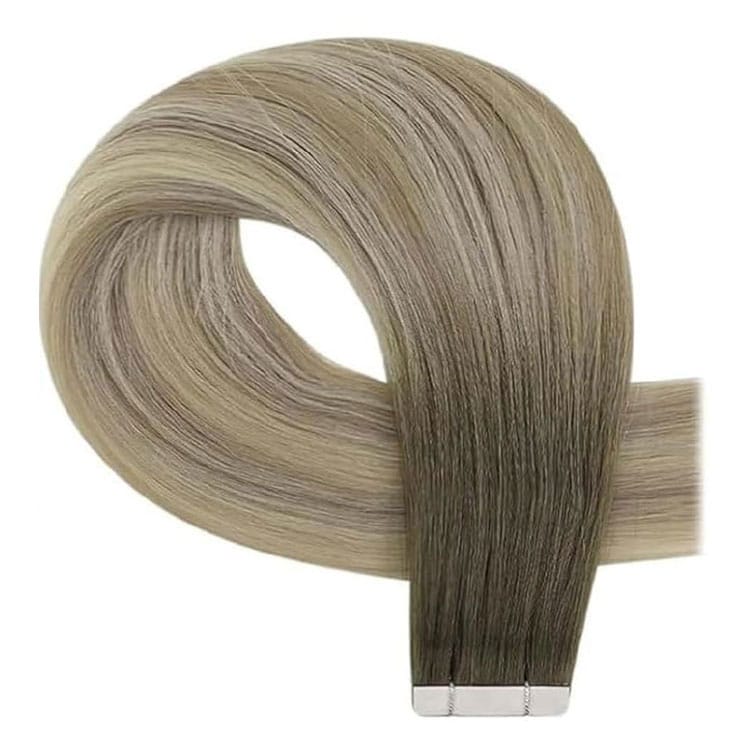
The Tape In Hair Extensions product uses a flat PU base and double-sided adhesive. Ruiteng also lists Machine Injection PU Hair, where the hair is injected into the thin base. Those descriptions concern construction. They do not establish that every person should have the same number or size of tabs.
Ask your stylist to show you an unfitted piece. Seeing the top edge, width and hair direction makes later care instructions much easier to understand. It also helps you distinguish the part that needs adhesive replacement from the hair that may remain suitable for reuse.
A realistic comparison with removable hair
| Everyday question | Tape-in installation | Removable clip-in pieces |
|---|---|---|
| Can I leave it off tomorrow? | Professional removal is part of changing the installation | Remove after the wear session |
| What happens on wash day? | Clean and dry around installed attachment areas | Wash your own hair with the pieces removed |
| How do I check the blend? | Discuss placement and shaping during fitting | Trial the pieces and adjust their positions |
| What changes before reuse? | Adhesive tabs normally need replacement | Check the clips, stitching and hair condition |
| What needs professional input? | Fitting, removal and maintenance assessment | Blending advice and any unsuitable support or coverage |
Neither option is automatically lower effort. Tape-ins avoid fitting removable pieces each morning, while clip-ins let you choose days without extensions. Decide which kind of effort fits the way you get ready and care for your hair.
Your own hair decides where the tabs can go
Coverage is easiest to judge with your usual parting and the hairstyles you actually wear. If you regularly pull the sides back, the edges of an attachment may be exposed even when the hair looks well blended while hanging loose. Tell the stylist this before the fitting begins.
Shorter layers around the face can also leave less hair available to hide a tab. More pieces do not automatically solve the problem. The placement plan may need to be more restrained, or another format may fit your haircut better.
The product description cautions against this tape-in product for sensitive or very oily scalps. Mention known sensitivities, irritation or difficulty tolerating adhesives during the consultation. A styling appointment should not become a trial-and-error way to investigate an active scalp problem. Seek appropriate professional advice before adding an attachment over an irritated area.
What to bring to the appointment
Bring photographs of the result you like and of your own hair in ordinary daylight. A rear view is particularly helpful because the line of your natural ends can disappear in a front-facing picture. Include a photograph with the hair in your usual ponytail or work style.
Describe your normal washing pattern and the products you use near the roots. Do not change everything immediately before the appointment without asking the stylist. They should tell you how to arrive with the hair prepared for the exact adhesive system.
Also ask how the finishing haircut will work. A long tape-in set may need shaping so your own ends do not form a separate shelf above it. Confirm how much hair is expected to be trimmed and whether the proposed length leaves enough room for that work.
The first few washes need attention to the attachment area
Follow the adhesive system’s instructions about when the first wash is appropriate. There is no reliable waiting period that can be copied across every tape product. The fitting professional should give you a clear instruction that matches the tabs used on your hair.
When washing is permitted, handle the hair in a controlled direction rather than piling the lengths together. Concentrate on cleaning the scalp while avoiding heavy rubbing across the attachment areas. Rinse carefully so the roots do not remain coated in product.
Condition the hair according to the product guidance, keeping products away from adhesive areas where instructed. The point is not to use as little conditioner as possible everywhere; it is to keep the lengths manageable without interfering with the tabs. Ask your stylist to identify that boundary on your own fitting rather than guessing from a diagram.
Drying and detangling are part of the everyday commitment
After washing, remove excess water gently and follow the advised drying method. The roots and attachment areas need attention as well as the ends. A surface that feels dry does not necessarily tell you that the hair underneath a row of tabs has dried in the same way.
Detangle the lengths carefully, supporting the hair above the area you are working through. Start with the ends and move upward in small sections. Avoid using a brush stroke to pull a knot through an attachment. If you cannot separate a tangle without pulling at the base, pause and ask for help.
Use the brush or comb recommended for your installation. A tool chosen only for its softness can still catch around tabs if used in the wrong direction. Have the stylist demonstrate the movement once before you leave, then repeat it while they can check your technique.
Normal hairstyles can expose a poor plan
A low ponytail, a loose half-up style and a high ponytail uncover different areas. Ask to check your preferred styles before the appointment ends. You need to see whether the attachment edges remain covered and whether any section feels pulled when the hair changes direction.
For exercise, choose a comfortable arrangement that keeps the hair under control without forcing the tabs upward. Discuss how to care for the fitting after heavy sweating. If you swim, ask about that specifically rather than assuming ordinary washing advice covers chlorine, salt water and prolonged wetting.
Human hair can be heat styled when the product allows it, but the adhesive and PU base do not have the same limits as the lengths. Keep direct tool contact away from the tabs. The lowest workable setting and a small test section are more useful than copying a temperature from an unrelated video.
Hair reuse and tape replacement are different jobs
When an installation needs attention, the hair is not automatically worn out. Suitable lengths may be reused after professional removal and replacement of the adhesive tabs. Their condition, color history and the state of the base all affect whether reuse makes sense.
Do not pull a slipping piece free and stick it back in a new place yourself. Residue, incorrect sectioning or damaged tabs can make the next problem harder to resolve. Keep the loose piece safe and contact the fitting professional for a proper assessment.
Ask about removal before committing to the method. You should know who will do it, what process they use and how the hair will be prepared if you want to reuse it. The relevant maintenance date depends on your fitting and how it is wearing, so agree on a review plan instead of relying on a universal number of weeks.
Know when to contact the stylist
Get advice if a tab slips, several sections begin tangling near the roots, an edge becomes exposed or the fitting starts to pull. A small issue is easier to assess while the sections remain separate than after repeated attempts to hide it with a tighter hairstyle.
For general background, the American Academy of Dermatology publishes extension care guidance. Treat persistent discomfort or concerns about hair loss as reasons for an appropriate assessment, rather than trying a stronger adhesive or adding more hair.
Before ordering, write down your current haircut, preferred color and wearing routine. Share those details with your stylist, then use the form below to ask about the listed tape-in product and any shade or base details they need to confirm.
Frequently asked questions
Are tape-ins completely invisible?
No. A flat base can still show if the placement lacks coverage or a hairstyle lifts the hair away from the edge. Check the sides, parting and the back in movement. The aim is a suitable concealed placement, rather than a promise that no angle can reveal an attachment.
Can I fit tape-ins like clip-ins at home?
They are different systems. Tape-ins require professional planning, application and removal. Ruiteng describes the tape-in format for salon fitting. If you want removable home styling, compare the clip-in or wire-supported products instead of treating adhesive tabs as temporary clips.
Can the same hair be fitted again?
Possibly, if the hair and base remain suitable. Reuse usually requires replacement tape tabs and professional preparation. The ability to replace adhesive does not guarantee that every previously worn set is in good enough condition to reinstall.
How often should I wash installed extensions?
Follow the fitting professional’s instructions for your scalp, hair and adhesive. Removable hair guidance is not a suitable washing schedule for an installed fitting. Ask how to clean the scalp and attachment area without leaving the lengths tangled or the roots coated in product.
What should I confirm before buying the hair?
Confirm the exact base, shade, length and planned fitting with your stylist. Ask who supplies the adhesive, whether the tabs suit the installation and how removal will be handled. The form below can help you request product information for that discussion.