On this page
Hair extensions are easiest to choose when you begin with the way you want to wear them. For occasional extra length, removable clip-ins or a wire-supported style may suit your routine. For hair that stays fitted between salon visits, look at tape-ins, wefts or individual strands. The attachment matters because it changes how you put the hair in, how you wash it and how you take it out.
The types of hair extensions are not a simple ladder from basic to best. A beautiful set can be the wrong choice if you cannot cover the base, dislike the fitting process or do not have time for upkeep. Work through those practical differences before comparing product names.

First decide whether you want to remove the hair each evening
This one decision rules out more unsuitable choices than a long list of technical terms. Removable hair gives you a different look for dinner, photographs or a special occasion, then comes out before bed. You can also leave it in its case on days when you want your own hair alone.
Installed extensions become part of your hair routine until a professional removes or refits them. That can make getting ready simpler on some mornings, but the convenience comes with attention to the attachments. You need to wash and dry around them, separate the lengths gently and return for maintenance when the fitting requires it.
Think about a normal week. If you swim frequently, wash your scalp often, wear your hair in a high ponytail or travel without much styling equipment, tell your stylist. These details explain whether a method is practical more clearly than a photograph of the finished hair.
Clip-ins give you separate pieces to arrange
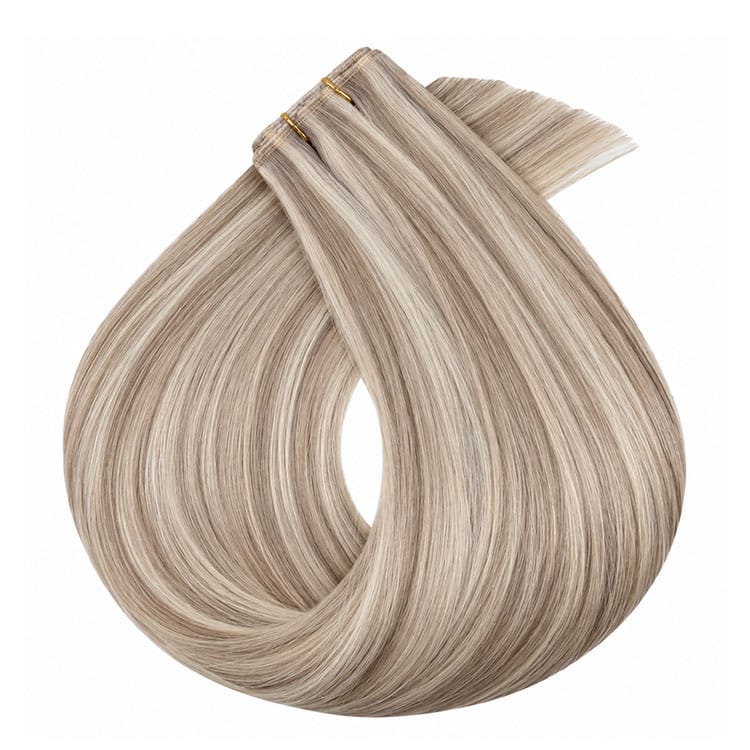
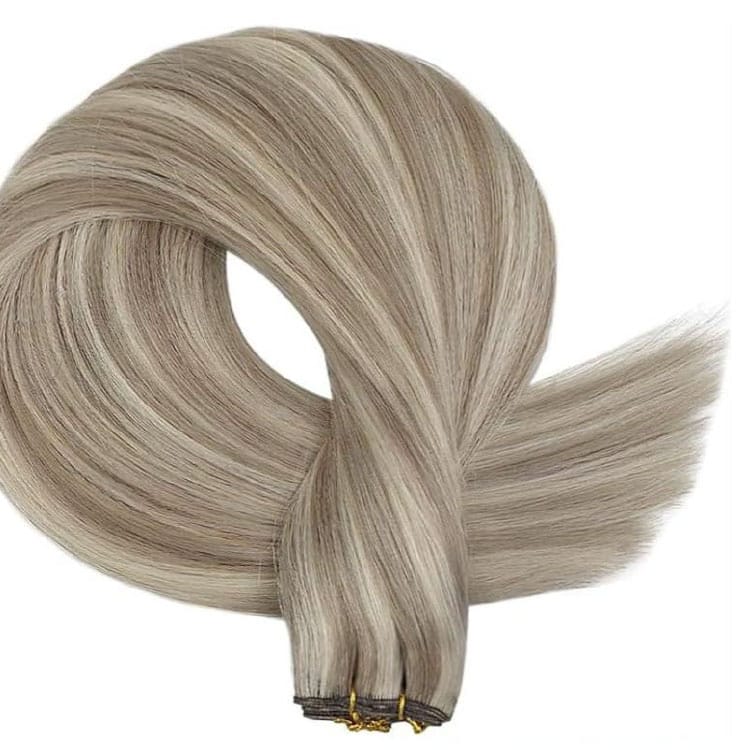
Traditional clip-ins have hair attached along a sewn edge with small clips. You fit the pieces under sections of your own hair, then let the top layer fall over the base. Several widths can cover the back and sides without requiring one large attachment to do everything.
Their main attraction is control. You can wear a smaller selection for fullness or use a broader arrangement for length. Their limit is also practical: your own hair must cover and support the pieces. Adding every piece in the pack can make a style harder to conceal rather than more convincing.
The Clip In Hair Extensions page shows a sewn human-hair format. A PU clip-in version changes the material at the base while keeping the basic idea of removable clips. Ask to see the base as well as the flowing hair when comparing the two.
A wire-supported style works differently from clips
Some removable extensions use a fine line to support the hair. You place the support beneath your natural hair and arrange your own hair over it. This avoids a row of clips, but the line and weft still need a suitable position and enough coverage.
Names can be confusing here. Ruiteng describes its Flip-in Weft as one weft supported by a single transparent line. Its Halo product is described with individual strand clear-line attachments. Do not assume that every product called halo or flip-in has exactly the same construction.
For a first trial, check the shape against your head, the visibility of the support and the way the lengths meet your own ends. If the piece shifts, more styling product is unlikely to solve a poor fit. Ask about the correct positioning and the replacement options for the wearing parts.
Tape-ins use flat adhesive attachment areas
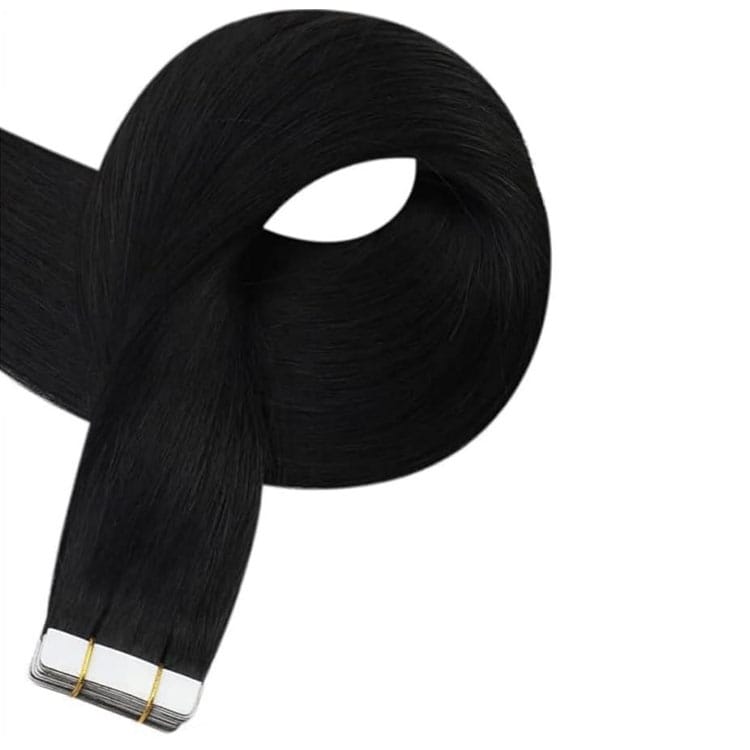
Tape-in extensions use a flat base and adhesive tape rather than removable clips. A professional plans where the sections sit so the hair can fall naturally and the attachment areas remain accessible for care. The number of pieces depends on coverage and the intended look.
A flat attachment can be helpful when you want the base to sit close to the head, but flat does not mean impossible to see. Hair density, parting position and how high you tie your hair all affect the result. Conditioner or styling residue around the attachment can also complicate care.
Tape tabs and the hair have different working lives. Reusing suitable hair normally involves replacing the adhesive tabs after professional removal. The Tape In Hair Extensions description also identifies sensitive or very oily scalps as a reason to reconsider this particular product with a professional.
Wefts put many hairs along one edge
A weft is a curtain of hair joined along a top edge. Machine Weft, Genius Weft and Butterfly Weft describe different constructions at that edge. Their names do not tell you the complete installation plan or the amount of hair your own hair can comfortably support.
Machine weft uses a woven edge. Genius Weft has a thin machine-woven base designed to lie flat. Butterfly Weft has a segmented base that can be separated at the intended petal gaps. A stylist can explain how the chosen construction affects width, positioning and the treatment of any cut edge.
For the wearer, the useful comparison is how the fitted row feels and behaves. Can you clean and dry beneath it? Does it show when the hair moves? Can you wear the hairstyles you normally choose? These are better questions than whether a name sounds newer.
Individual strands give a different kind of placement
I-tip extensions are fitted strand by strand using small rings and professional pliers. U-tip extensions have shaped adhesive tips that a professional softens with a fitting tool. Nano Ring extensions use fine wire tips with small metal rings. Their attachment materials and removal needs are different.
Individual placement can offer flexibility, but it also creates many separate attachment points to care for. It is important to distinguish the hair length from the tip, ring or bond. The hair may still look usable when an attachment needs replacing or reworking.
Avoid choosing a method simply because it is called cold, nano or keratin. Ask what actually touches your natural hair, what equipment is used and who will remove it. A clear explanation of removal should come before an appointment, even when the finished style is the part you are most excited about.
Compare the everyday trade-offs
| Format | How you wear it | What to check before choosing |
|---|---|---|
| Clip-in pieces | Fit and remove for individual wear sessions | Coverage over clips, support and piece placement |
| Wire-supported hair | Place the support beneath natural hair | Line position, fit and the exact construction |
| Tape-in sections | Keep professionally fitted sections in place between appointments | Adhesive care, scalp suitability and removal |
| Weft rows | Wear a professionally planned row arrangement | Access for washing, edge position and support |
| Ring-fitted strands | Wear individual strands secured with small rings | Tip compatibility, movement and maintenance |
| U-tip strands | Wear professionally bonded individual strands | Heat fitting, bond care and removal process |
The table is a starting point, not a personal fitting prescription. A smaller, well-placed amount of the right hair can look more natural than a larger amount chosen to copy a photograph. Your own haircut and density remain part of the finished result.
Color and haircut can outweigh the attachment name
The longest visible section of your own hair should blend with the added lengths. Compare the middle and ends in daylight rather than choosing only from the roots. If your hair has highlights or a darker root, a single solid shade may not reproduce the variation.
Length also changes the blend. A strong, blunt shoulder-length line can remain visible above much longer extensions unless the quantities, placement and haircut work together. Ask how much finishing will be needed and whether the proposed length allows room for that trim.
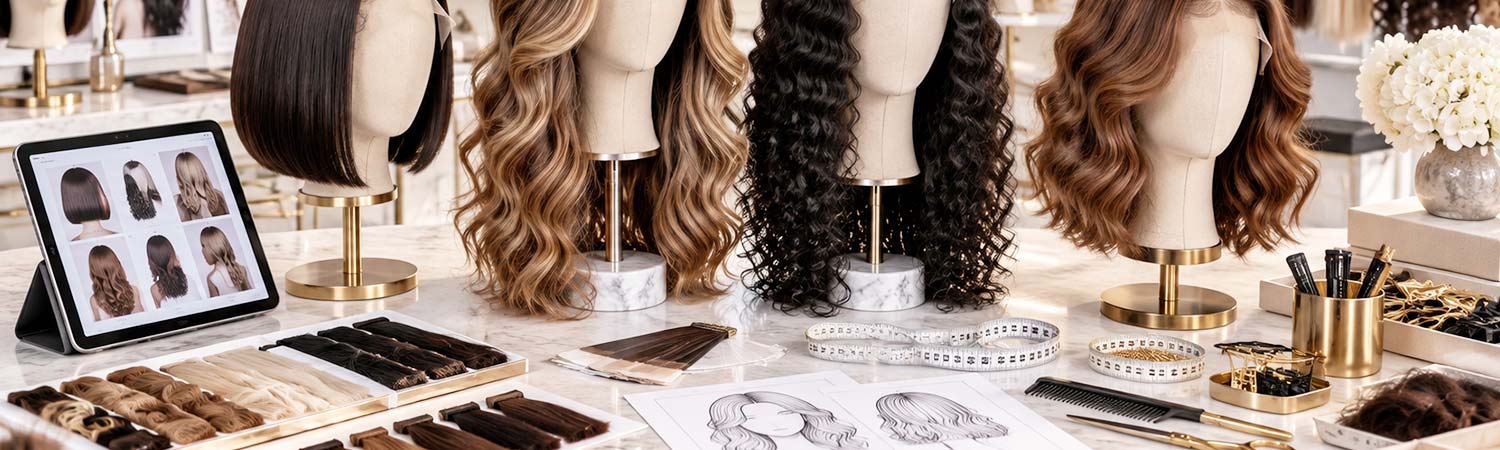
Bring photographs of your hair from the back and sides, plus one example of the result you want. Include a picture with your usual parting. This gives a stylist useful information without requiring you to know specialist terms. The color chart can help you start the shade discussion, but a physical swatch is more useful than a screen alone.
Finish the decision with three practical checks
First, confirm who will fit and remove the hair. Removable home styling and professional installation are different commitments. Second, ask for care instructions that name the exact base, tape, ring or bond. Third, check how replacement parts and refitting are handled before deciding that reusable hair will be easy to maintain.
Comfort belongs in this decision too. Repeated pulling from a hairstyle can harm natural hair. The American Academy of Dermatology discusses this in its guidance on hairstyles that pull. Pain is a reason to stop and have the fitting assessed, rather than a sign that the style needs breaking in.
Choose the method you understand and can care for. Once the wearing routine is clear, comparing shade, length and finish becomes a much smaller task.
Frequently asked questions
Which type is easiest for occasional wear?
Clip-ins and correctly fitted wire-supported styles can be removed after an individual wear session. Choose between them by checking coverage, support and the style you want. A removable product still needs a comfortable fit and enough of your own hair to hide its base.
Does human hair mean I can use any styling tool?
No. The hair and its attachment have separate limits. A tool suitable for the lengths can damage a PU base, line, tape tab or bond. Follow the exact product instructions and keep direct tool contact away from attachment areas.
Can a thin base solve every problem with fine hair?
No. A thin base may reduce bulk, but visibility, support and weight still matter. Sparse coverage or fragile hair needs a professional assessment. Buying a slimmer base does not establish that extensions are suitable for your scalp or hair condition.
Are the newest extension methods always better?
No. A newer name may describe a different seam or fitting system rather than a better result for everyone. Compare construction, daily care and removal. A familiar method fitted well may suit your routine more closely than a system with requirements you cannot maintain.
What should I send when asking for help choosing?
Send clear daylight photographs, your current length, your preferred wearing frequency and a description of the result. Mention your normal hairstyles and any concerns about your scalp. Use the form below to ask which listed product formats are worth discussing with your stylist.