On this page
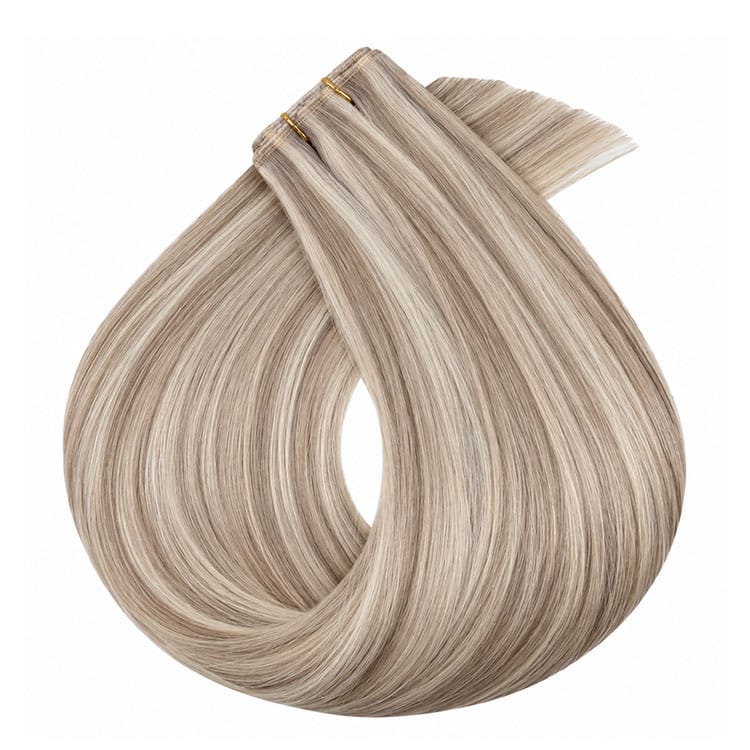
Machine weft hair extensions have many hairs joined along a machine-woven top edge. That continuous edge makes them a flexible starting format for a professional fitting, but the base, the hair quantity and the finished installation need to be considered separately. Choose them for a wearing plan you understand, rather than because a thicker-looking bundle appears to offer more value.
For most readers, the practical questions are simple: will the weft blend with my own hair, can I care for the row and what happens when the hair needs removing? The woven construction helps explain those questions without turning the choice into a manufacturing lesson.
Follow the edge across the curtain of hair
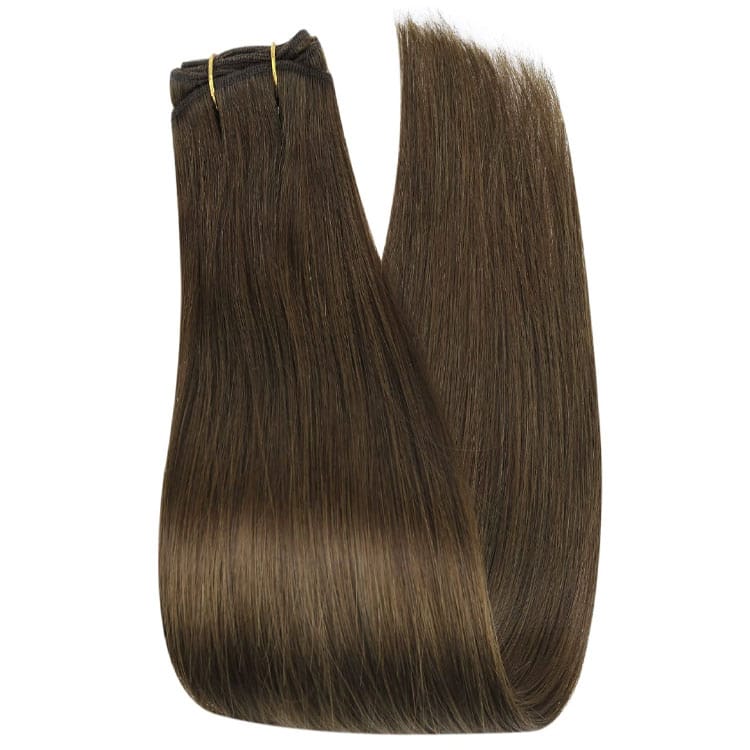
Lay a loose weft flat and you can see the joined edge running across the top. Beneath it, the hair hangs as one curtain. That is the basic difference between a weft and individual extension strands, each of which has its own tip or attachment point.
The Machine Weft Hair product is described as human hair woven by machine along a durable edge. It can be used for salon sew-in fitting or further processed into other extension formats. The product description also allows cutting to width, with securing of cut edges recommended to help limit shedding.
Those details tell you what the material is, but not exactly how it will be fitted to your own hair. Ask your stylist to explain the support under the row and the number of widths they intend to use. The complete installation is more specific than the weft name.
Compare the edge fairly with other wefts
A slim Genius Weft and a standard machine weft can contain different amounts of hair even when the lengths look alike. Compare similar lengths and quantities if you want to understand what the seam itself changes.
Butterfly Weft introduces a segmented base with intended separation gaps. It is another construction choice, rather than a different name for the same continuous edge. Handling and preparation instructions should follow the product actually being used.
| Point to compare | Machine Weft Hair | Genius Weft | Butterfly Weft |
|---|---|---|---|
| Listed base | Durable machine-woven edge | Thin machine-woven edge | Segmented edge with petal gaps |
| Width preparation | Cut and secure edges | Cut and secure edges as recommended | Separate along intended petal lines |
| What to inspect in a sample | Edge bulk and hair distribution | Slim edge and hair distribution | Gaps, sections and hair distribution |
| Personal fitting still needed | Yes | Yes | Yes |
The useful choice depends on the issue you want to address. If your main concern is an obvious ridge, the base may deserve close attention. If the problem is a shade mismatch or too little hair at the ends, changing seam construction alone may not help.
A sturdy edge still has to sit comfortably
A durable construction can be useful during careful handling and professional preparation. It does not mean a row should feel heavy or tight. The total amount of hair, the position and the way it is supported determine how much load your natural hair carries.
If you mainly want fuller ends, explain that goal before discussing long lengths. More hair can create a striking photograph while making day-to-day styling less convenient. A reasonable amount in the right place is often easier to cover and maintain than several crowded layers.
Touch a sample edge if one is available and ask how it compares with the planned installation. A weft feels different lying loose on your hand from the way it feels supported along a fitted row. The sample is useful for understanding construction, while the fitting plan explains the wearing experience.
Think about the line where your own hair ends
If your natural hair has a blunt cut, its ends can form a visible horizontal line above longer extensions. This does not automatically mean the weft is faulty or the shade is wrong. The added hair needs to work with your haircut and the amount of coverage at that line.
Ask about a blending trim before the fitting. The aim is to connect the natural shape with the added length, rather than simply cutting every strand to one measurement. Let the stylist know whether you normally wear the hair straight, with a soft wave or tied back.
Tapered or heavily layered natural hair creates another kind of challenge. The extension ends may look much fuller than the hair above them. Matching the amount and texture helps avoid a sudden change in density that remains visible in movement.
Width decisions are permanent preparation decisions
The listed machine weft can be cut to the required width, but the edge should be secured as recommended. A clean-looking cut is not proof that the joined hairs at that point will remain stable without preparation.
Have the planned widths identified before any cutting. Different parts of the head have different curves and coverage. A section that is too wide can be awkward to position, while several short sections can create more edges to conceal and manage.
If you are buying material before the fitting appointment, confirm the format with your stylist first. They may want the weft left intact until they have assessed your hair. Cutting it at home based on an online diagram can remove options before the person doing the fitting has planned the row.
Match the color across the length
Hold a swatch beside the natural hair that will sit next to the extensions. For many styles, that means the mid-lengths and ends rather than the roots. A dark root with lighter lengths can make a single dark weft look disconnected beneath the rest of the hair.
Compare in indirect daylight and look at both brightness and tone. Two brown shades can be similar in depth while one looks warmer or redder. A photograph taken under yellow room lighting may not show that difference reliably.
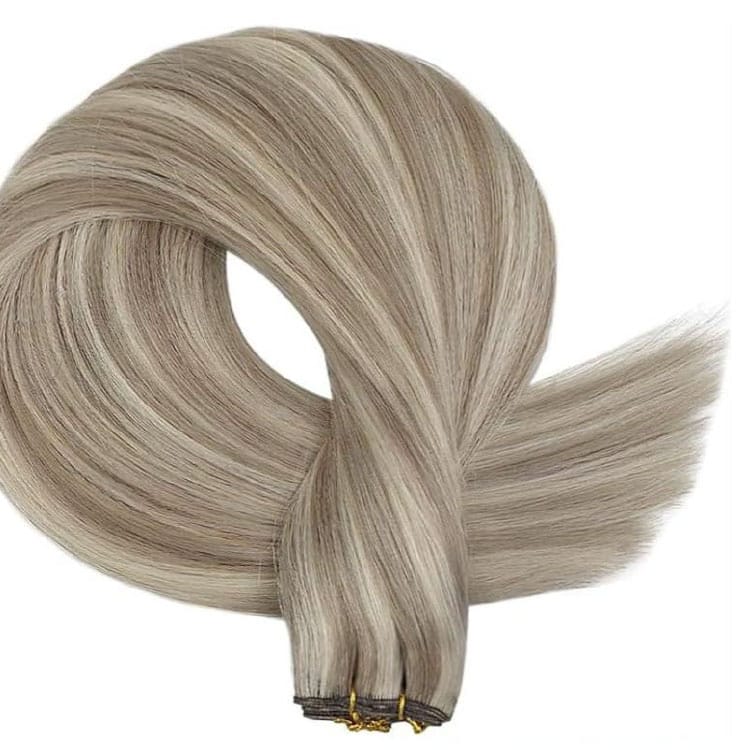
The color chart can help you name the range you want to explore. Ask about a physical sample when the match is close or your hair has several colors. If you want a brighter or mixed effect, discuss how the shades will be distributed across the row so the result does not look striped.
Wash and dry with the fitted support in mind
Care for an installed machine weft should begin with the instructions for the actual fitting. Ask how to clean the scalp around the support, how to avoid tangling near the row and how to dry the less visible hair at the base.
When detangling the lengths, support the hair above the knot and work patiently from the ends upward. The woven edge is not a handle to pull against. Forcing a brush through a tangle can stress both the extension hair and the natural hair supporting the row.
After washing, follow the advised drying method instead of judging only by the tips. If the area beneath the row is hard to reach, ask the stylist to demonstrate a workable method. The best care routine is one you can repeat at home with the equipment and time you actually have.
Keep heat and color changes away from assumptions
The human hair in the listed product is described as suitable for washing, coloring and heat styling. That is a starting capability, not a guarantee that every chemical change or tool setting will give the result you want. The hair’s existing processing history affects what is sensible next.
Keep styling tools away from the top edge and the installation’s support components. Test a small section before restyling the entire weft. If you are considering a major color change, speak to a colorist who understands extension hair before applying anything to the installed row.
A close shade match at the start usually makes the wearing routine simpler. It reduces the temptation to correct a mismatch with repeated heat styling, toning or coloring after the fitting. Ask the shade questions while the hair is still a sample rather than waiting until it is on your head.
Reuse begins with careful removal
Some well-maintained hair can remain useful after an installation is removed. Whether that particular weft should be refitted depends on the condition of the hair, the edge and any areas that were cut or reworked. Ask the professional to assess those parts separately.
Keep the product details with the hair, including shade, length and any color changes made later. This makes matching replacement material easier. It also avoids treating a familiar-looking bundle as if it has the same history as a new one.
For background on the larger category, Wikipedia explains hair extensions and integration methods. To compare the listed base options directly, view Genius Weft alongside Machine Weft Hair, then use the form below to ask for the construction or sample details your stylist needs.
Frequently asked questions
Does machine weft mean synthetic hair?
No. Machine describes how the edge is constructed. The Ruiteng listing describes this product as human hair. Fiber type and base construction are separate features, so check both rather than using the manufacturing term as a material label.
Can I cut the weft myself?
The product can be cut to width, but cut edges need appropriate securing as recommended. Let the fitting professional plan the sections before cutting. An unnecessary cut can reduce the options for arranging the row.
Is a heavier weft always better quality?
No. Weight describes quantity, not every aspect of quality. The shade, length distribution, condition of the hair and construction all matter. More hair can also be unsuitable for the support and coverage available on a particular person.
Can machine weft look natural on a layered haircut?
It can be considered, but the whole blend needs planning. The stylist should look at where your layers finish, the amount of added hair and the intended final shape. A matching shade alone will not hide a strong difference between the two outlines.
What information should I request before ordering?
Ask about the hair material, shade, length, quantity and preparation guidance for the edge. Have your stylist confirm the format they want to fit. Share those requirements in the form below so the product discussion stays specific.